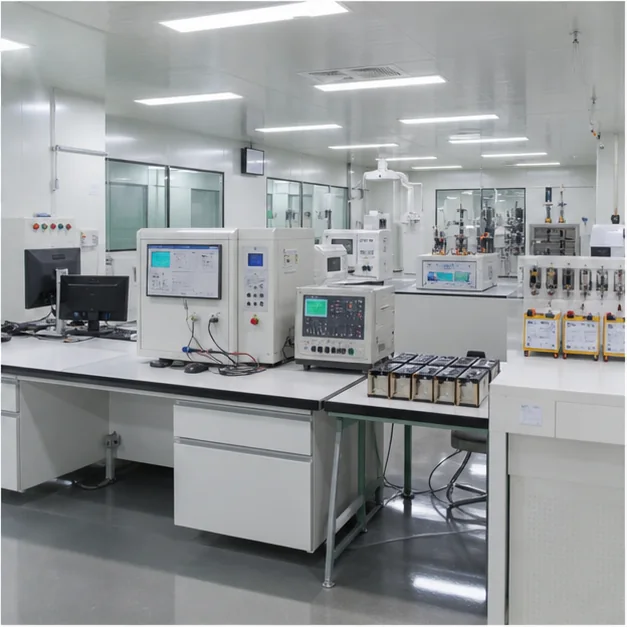
Front terminal telecom batteries are the workhorse of modern server rack installations, offering a compact footprint and high power density for critical DC loads. This guide provides a technical walkthrough of installation, commissioning, and maintenance best practices, while also addressing the procurement realities of sourcing these units from a China battery manufacturer. We cover the specific manufacturing controls, export logistics, and UN classification nuances that international importers and system integrators must navigate.
Understanding Front Terminal Battery Design for Rack Integration
Front terminal batteries, also known as front-access or front-access terminal batteries, are engineered specifically for standardized 19-inch and 23-inch server racks. Unlike conventional batteries with top-mounted terminals, these units place both positive and negative terminals on the front face. This design allows for side-by-side mounting without sacrificing accessibility, reducing the overall rack footprint by up to 30% compared to equivalent capacity top-terminal units.
Key Dimensional and Electrical Parameters
When specifying front terminal batteries for telecom applications, you must evaluate several critical parameters. The table below outlines typical specifications for common 12V front terminal units used in telecom server racks. Always confirm the exact values with the manufacturer's datasheet, as these are representative examples, not universal standards.
| Parameter | Unit | Typical Range (12V Front Terminal) | Notes |
|---|---|---|---|
| Nominal Capacity (C10) | Ah | 50 – 200 Ah | Discharge rate at 10 hours to 1.80 Vpc |
| Float Voltage | Vpc | 2.25 – 2.30 V | At 25°C, temperature compensated |
| Equalization Voltage | Vpc | 2.35 – 2.40 V | Only when specified by manufacturer |
| Operating Temperature | °C | -20 to +50 | Derate capacity above 25°C |
| Terminal Torque | N·m | 10 – 14 | For M8 bolts; verify per datasheet |
| Short Circuit Current | A | 1500 – 3000 | Dependent on internal resistance |
| Design Float Life | Years | 10 – 15 | At 20-25°C, per manufacturer's conditions |
Internal Construction: AGM vs. Gel
Front terminal telecom batteries predominantly use either Absorbent Glass Mat (AGM) or Gel technology. AGM batteries use a microporous glass mat to absorb the electrolyte, offering low internal resistance and high discharge rates. Gel batteries use a thixotropic silica gel to immobilize the electrolyte, providing superior cycle life and resilience to deep discharges. For server rack applications with frequent grid fluctuations, gel technology often provides better deep-cycle resilience, while AGM excels in high-rate discharge scenarios typical of short-duration UPS backup. Your choice should align with the specific load profile and backup duration requirements of the telecom site.
Installation Best Practices for Server Rack Environments
Proper installation is critical for the safety and longevity of front terminal batteries. The following procedures are based on industry-standard practices and should be adapted to the specific rack system and battery model you are deploying.
Rack Structural Integrity and Ventilation
Before mounting, verify the rack's load-bearing capacity. A fully populated 19-inch rack with 200Ah front terminal batteries can easily exceed 400 kg. The rack must be bolted to the floor or seismically braced according to local building codes. Ventilation is equally critical. While VRLA (Valve-Regulated Lead-Acid) batteries emit minimal gas under normal float operation, they can vent hydrogen and oxygen under overcharge conditions. Ensure the rack area has at least 0.5 air changes per hour, or follow the manufacturer's ventilation calculation based on the number of cells and charging voltage.
Terminal Preparation and Torque Control
The most common installation error is improper terminal torque. Under-torqued terminals increase contact resistance, leading to localized heating and thermal runaway risk. Over-torqued terminals can crack the lead bushing or strip the threads. Use a calibrated torque wrench and follow the manufacturer's specification, typically 10-14 N·m for M8 bolts. Apply a thin layer of anti-oxidant compound (non-petroleum based) to the terminal posts before connecting the inter-cell connectors. After torquing, measure the voltage across each connection point with a digital voltmeter to verify a drop of less than 10 mV under load.
Series Connections and Voltage Verification
For a typical 48V DC telecom system, you will connect four 12V batteries in series. Ensure all inter-battery connectors are the correct length and gauge for the expected current. After wiring, verify the total string voltage before connecting to the load. For a 48V system, the open-circuit voltage should be approximately 50.4V to 52.8V (12.6V to 13.2V per battery) depending on state of charge. Never connect batteries of different states of charge or different manufacturers in the same string.
Commissioning and Initial Charge Procedures
Commissioning is not simply connecting the battery and switching on the rectifier. A proper initial charge ensures the battery reaches full capacity and balances the cells.
First Charge and Float Voltage Setting
Upon installation, the battery string should be charged at the manufacturer's recommended boost or equalization voltage for a specified duration, typically 16-24 hours, or until the charging current stabilizes below 0.5% of the rated capacity. After this initial charge, switch to float voltage. Set the rectifier output to the correct float voltage per cell, typically 2.25-2.30 Vpc at 25°C. Crucially, enable temperature compensation on the rectifier. The compensation factor is typically -3 mV/°C/cell, meaning the float voltage should decrease by 3 mV per cell for every degree Celsius above 25°C, and increase correspondingly below 25°C. Failure to implement temperature compensation is a leading cause of premature battery failure in telecom sites.
Capacity Acceptance Test
Before placing the battery on critical load, perform a capacity acceptance test. Discharge the fully charged battery at the C10 rate (or the specified rate) to the manufacturer's end-of-discharge voltage, typically 1.80 Vpc. Record the actual discharge time. The battery passes if it delivers at least 95% of its rated capacity. If it fails, recharge and repeat the test. Document all results for warranty and baseline performance records. This baseline is essential for future predictive maintenance.
Routine Maintenance and Monitoring Protocols
Front terminal batteries are often marketed as "maintenance-free," but this is a misnomer. They are low-maintenance, not no-maintenance. A rigorous monitoring regime is essential for maximizing service life and preventing catastrophic failures.
Periodic Inspection Checklist
Perform quarterly visual and electrical inspections. Check for terminal corrosion, signs of case bulging, or electrolyte leakage. Measure and record the float voltage of each individual battery and the total string voltage. A deviation of more than ±0.05 Vpc from the average indicates a potential cell imbalance. Also, measure the internal resistance of each battery using a dedicated ohmmeter. A 20% increase from the baseline reading is a strong indicator of capacity loss and impending failure. Torque-check a sample of terminal connections annually.
Thermal Scanning and Hotspot Detection
Use an infrared thermal camera to scan the battery string and connections during float operation. Loose connections or high-resistance cells will appear as hotspots. Any connection showing a temperature rise of more than 5°C above the ambient temperature requires immediate attention. Re-torque the connection and re-scan. If the hotspot persists, the cell may have internal short circuits and should be replaced.
Sourcing from a Chinese OEM Factory: Manufacturing, QC, and Logistics
Buyers should audit the Chinese factory's manufacturing route from lead-alloy control and plate casting through curing, assembly, formation, capacity testing and final inspection. Plate casting parameters, grid alloy records and lot traceability should be included in the supplier quality plan. For export logistics, confirm the battery design and current carrier requirements before assigning UN2800 for qualifying non-spillable batteries or UN2794 for wet batteries; sea freight documentation, packaging and test evidence must match the actual product.
For international importers and EPC contractors, sourcing front terminal telecom batteries from a Chinese OEM factory offers significant cost advantages, but requires diligent technical and logistical oversight. Understanding the manufacturing process and export requirements is non-negotiable.
Manufacturing Process and Plate Casting Controls
A reputable China solar gel battery manufacturer will employ a vertically integrated production line. The critical step is plate casting. Positive grid alloys are typically lead-calcium-tin, while negative grids may use lead-calcium or lead-antimony depending on the design. The casting process must control the alloy temperature, mold temperature, and cooling rate to prevent micro-cracks and ensure consistent grid thickness. Ask your supplier for their grid thickness tolerance and how they verify it—typically via X-ray fluorescence (XRF) analysis and micrometer sampling. The paste mixing process, which determines the active material's porosity and adhesion, is equally critical. The paste density and curing humidity directly impact capacity and cycle life. A competent Chinese factory will have ISO 9001 quality management systems in place and will provide batch-specific material certificates upon request.
Production QC and In-Process Testing
In-process quality control is where leading Chinese factories differentiate themselves. Look for suppliers who conduct 100% testing of finished batteries for voltage, internal resistance, and leak detection. They should also perform destructive testing on a sample basis, including capacity discharge tests and thermal runaway simulations. Ask for the factory's AQL (Acceptable Quality Limit) sampling plan for visual and dimensional inspection. A standard AQL of 0.65 for major defects and 1.5 for minor defects is a reasonable benchmark. Do not accept vague claims of "100% quality"; demand specific test parameters and acceptance criteria in your RFQ.
Export Logistics and UN Classification: UN2800 vs. UN2794
This is a critical area where procurement errors cause costly shipping delays. The correct UN classification for your batteries depends on their construction and test results, not on a blanket rule. You must verify the classification with your supplier and confirm it with your freight forwarder.
-
UN2800 applies to "Batteries, wet, non-spillable, electric storage." This classification is for batteries that pass specific vibration and pressure differential tests, proving they will not leak electrolyte under normal transport conditions. Most AGM and gel VRLA batteries, including front terminal types, qualify for UN2800 if they pass these tests. UN2800 batteries are generally not subject to the full Dangerous Goods regulations if they meet the special provision 238 requirements, which include being packed to prevent short circuits and being marked as "NON-SPILLABLE."
-
UN2794 applies to "Batteries, wet, filled with acid, electric storage." This is the classification for conventional flooded lead-acid batteries that can spill electrolyte. If your front terminal battery is a flooded type (less common but still available), it must be shipped as UN2794, which requires full compliance with dangerous goods regulations, including specific packaging, labeling, and transport documentation.
Critical Verification Step: Do not assume your battery is UN2800. Request the test report from the manufacturer. The report should reference the specific UN Manual of Tests and Criteria, Part III, Subsection 38.3. Confirm with your freight forwarder that the classification is accepted for your shipping route and mode (air, sea, or road). Sea freight documentation for UN2800 batteries is simpler than for UN2794, but you still need a Material Safety Data Sheet (MSDS) and a certificate of non-spillability. For UN2794, you will need a full Dangerous Goods Declaration and the carrier's approval. Always confirm the current rule with your carrier or a certified dangerous goods safety adviser, as regulations are periodically updated.
RFQ Data and Sourcing Decisions
When issuing an RFQ to a Chinese factory, provide precise technical data: capacity (C10 or C8), voltage, physical dimensions, terminal type, operating temperature range, and design life. Request the following documentation: UN test reports, MSDS, batch test certificates, and a factory inspection report. If possible, arrange a third-party inspection (e.g., SGS, Bureau Veritas) before shipment. This is a standard practice for international buyers and is not an unreasonable request. The inspection should cover visual checks, dimensional verification, and sample capacity testing. This due diligence protects your investment and ensures the batteries you receive meet the agreed specifications.